Blog
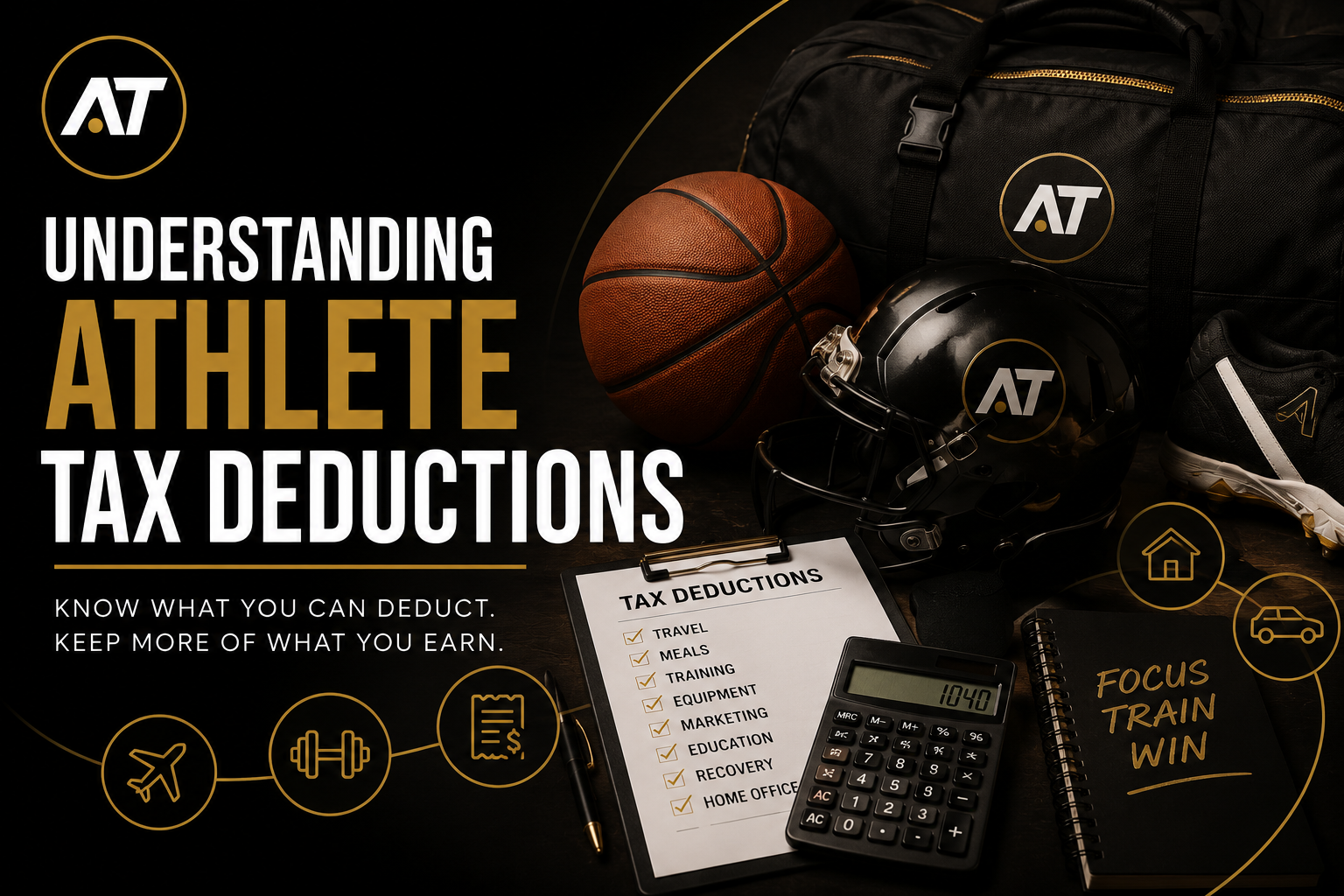
Understanding Athlete Tax Deductions
by:
Athletes Tax Team
Published on:
June 5, 2026
Blog
Most athletes leave thousands of dollars on the table every single year. Not because they earn less, but because nobody told them what they can actually write off. If you are competing at the college or professional level, your athletic career is a business. That means the IRS allows you to deduct legitimate business expenses against your income. Here is what you need to know.
You Are Probably Overpaying
The average athlete has no idea how many expenses qualify as deductions. They file a basic return, pay a big check to the IRS, and move on. A few adjustments to how you track and categorize your spending can change that picture significantly.
Agent and Advisor Fees
If you are self-employed (and most athletes receiving NIL or endorsement income are), the fees you pay to agents, financial advisors, and managers are deductible as ordinary business expenses. These are the people helping you generate income. The IRS recognizes that.
Training Costs
Working with a personal trainer, a sports psychologist, or a nutrition coach? If those services are directly tied to maintaining your professional performance, they qualify. Keep the invoices and be able to connect each expense to your athletic career.
Equipment and Gear for Content Creation
NIL athletes especially: the camera, ring light, microphone, tripod, and editing software you use to produce brand content are business tools. They are deductible. Same goes for any gear purchased specifically for sponsored appearances or shoots.
Home Office Deduction
If you have a dedicated space in your home where you manage your brand partnerships, respond to sponsor communications, or run your business operations, you may qualify for the home office deduction. The space needs to be used regularly and exclusively for business.
Professional Development
Business courses, financial literacy programs, media training, and coaching for public speaking or branding all count as professional development. Investing in yourself as a brand is a legitimate business expense.
The Habit That Makes Everything Work
None of these deductions matter if you cannot prove them. The IRS requires documentation. That means keeping receipts, saving invoices, and recording what each expense was for and how it connected to your career. A simple folder on your phone or a basic expense tracking app is enough to start. Build the habit now.
3 Immediate Action Steps
Athlete's Tax works exclusively with college and professional athletes to help them keep more of what they earn. Schedule a free consultation at athletestax.com.